


How the CEM and
the generator work together.
Continuous supply from the CEM, automatic recharging from 30% to 80%, and the benefits of stable power for hotels, data centres and industry.
Choose a chapter.
The explanation, step by step.
01 · When the grid goes down
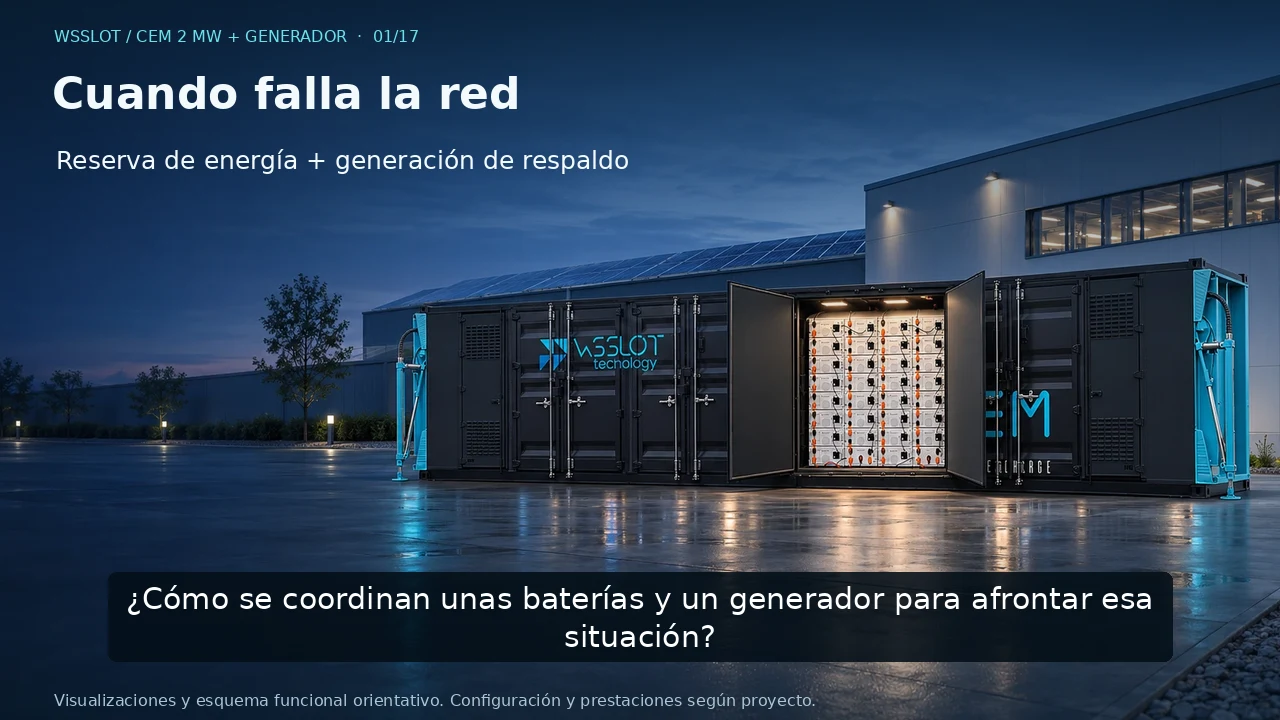
A grid outage can stop a service, interrupt a process or leave critical equipment without power. How can batteries and a generator work together in that situation? We follow the system from the power input to the loads it supplies.
02 · 2 MW CEM + generator
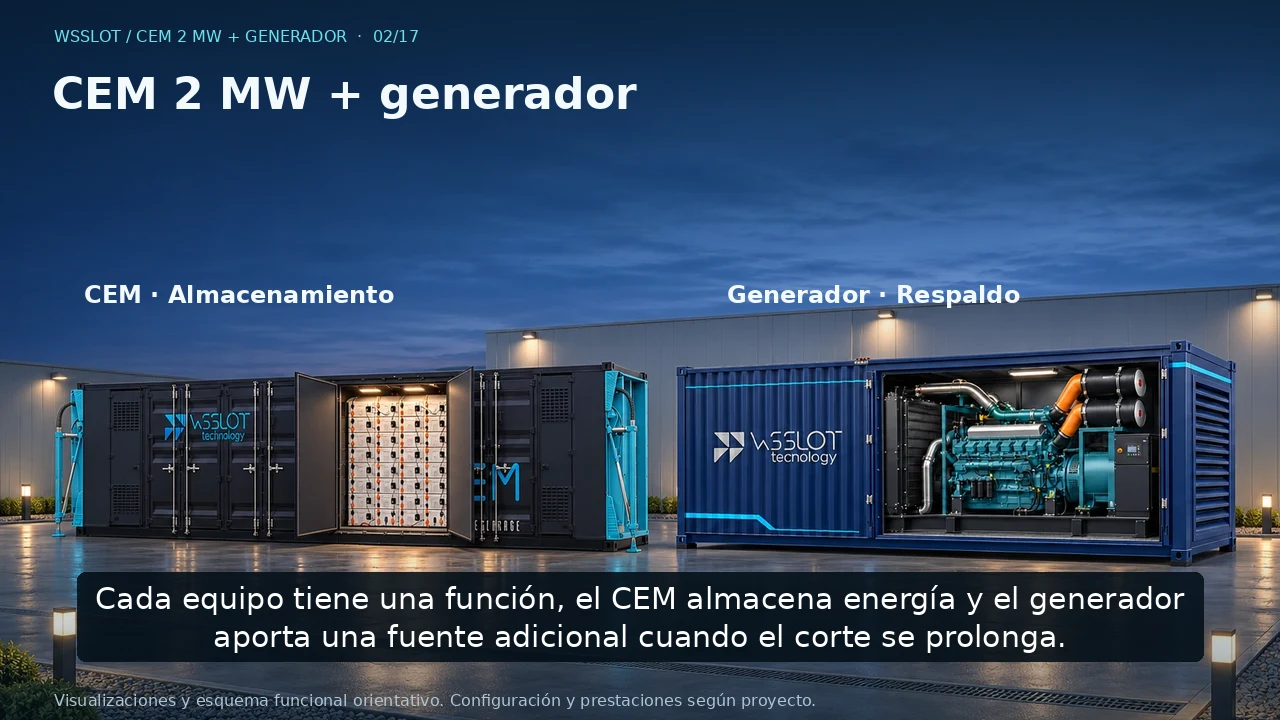
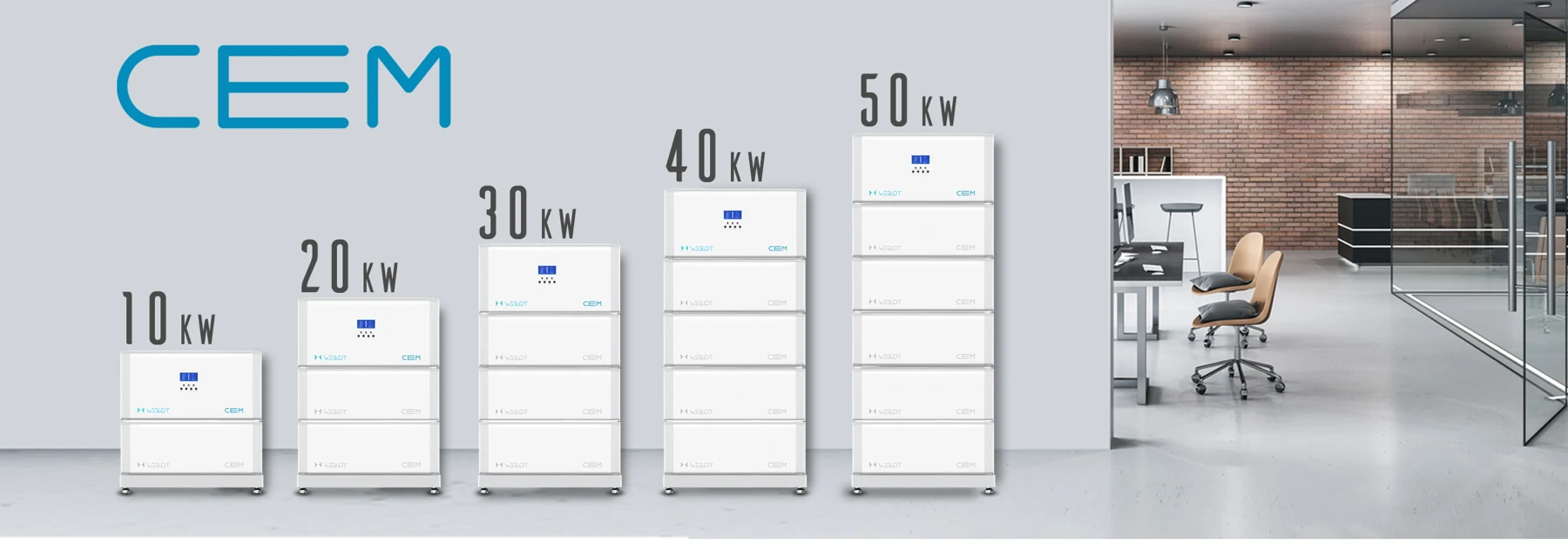
The proposed system combines a two-megawatt CEM with a backup generator. The CEM stores energy and the generator provides an additional source during extended outages. The controller coordinates both with the installation.
03 · The energy reserve
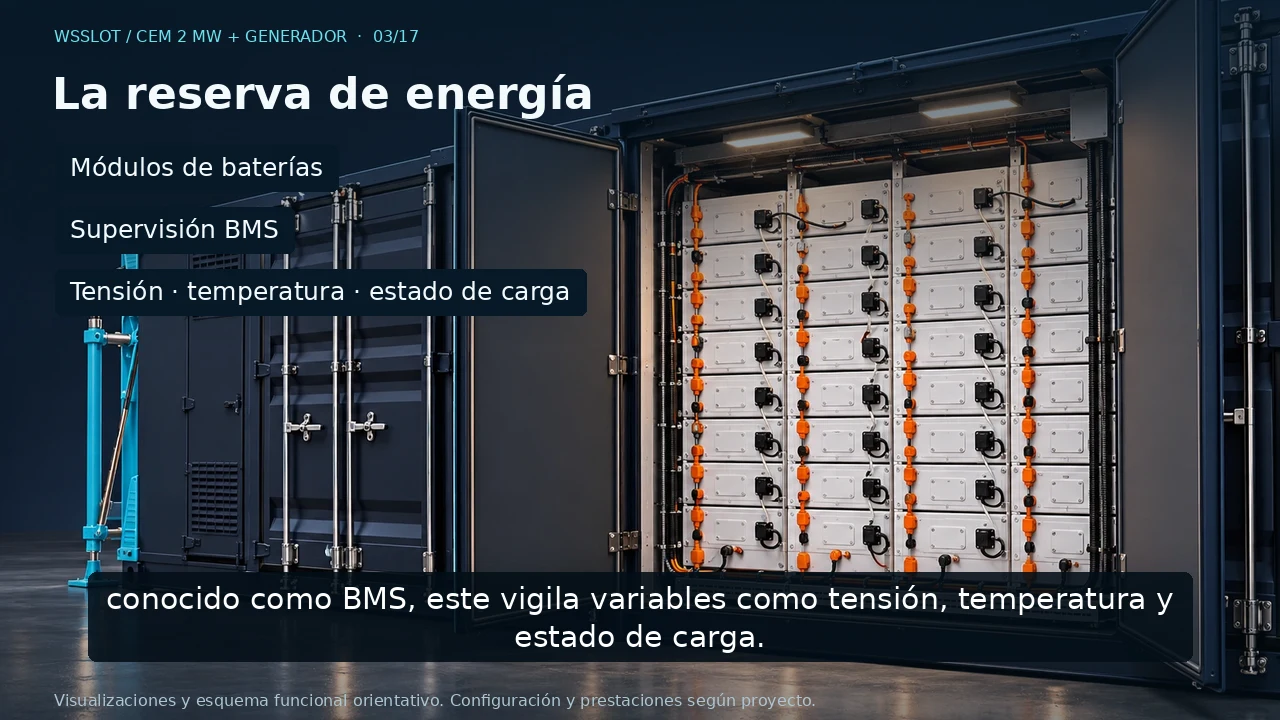
The storage system contains battery modules and a battery management system, or BMS. It monitors voltage, temperature and state of charge. The available reserve must remain within the safety limits defined for the configuration.
04 · Conversion and control
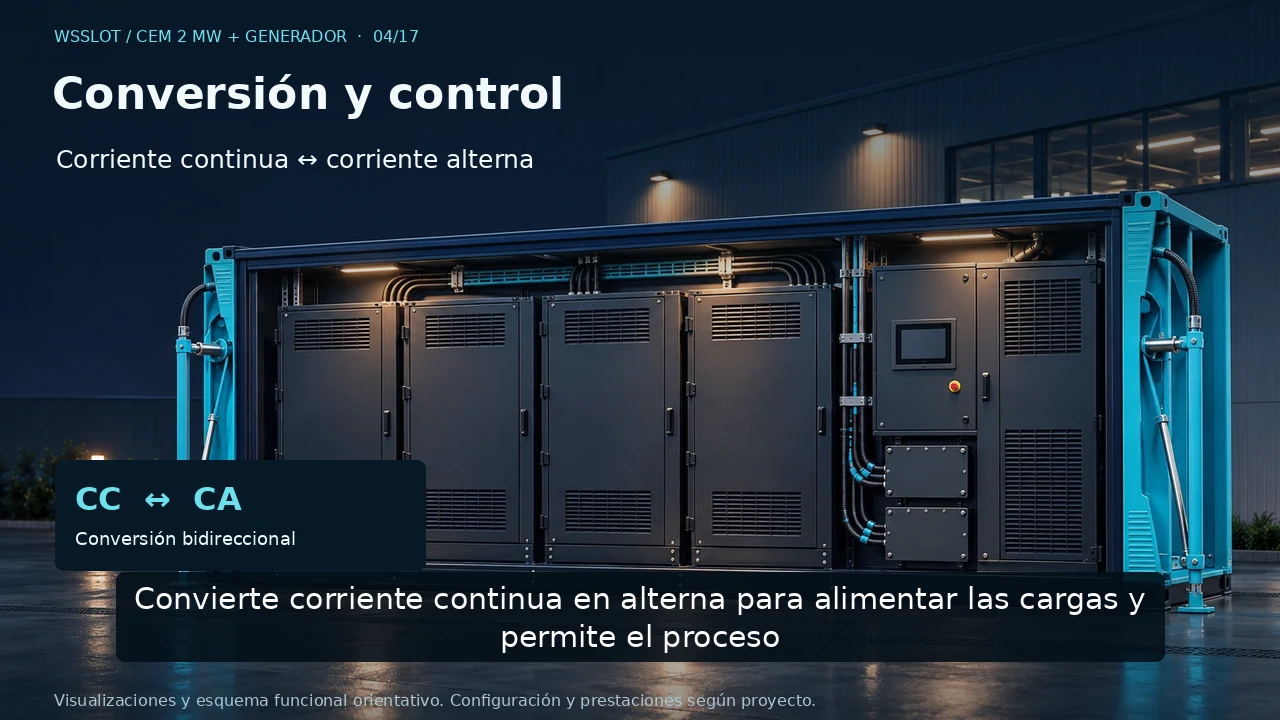
The bidirectional power conversion system, or PCS, connects the batteries to the electrical system. It converts DC to AC to supply the loads and reverses the process when charging the batteries. Its power and operating modes must match the project.
05 · Always powered by the CEM
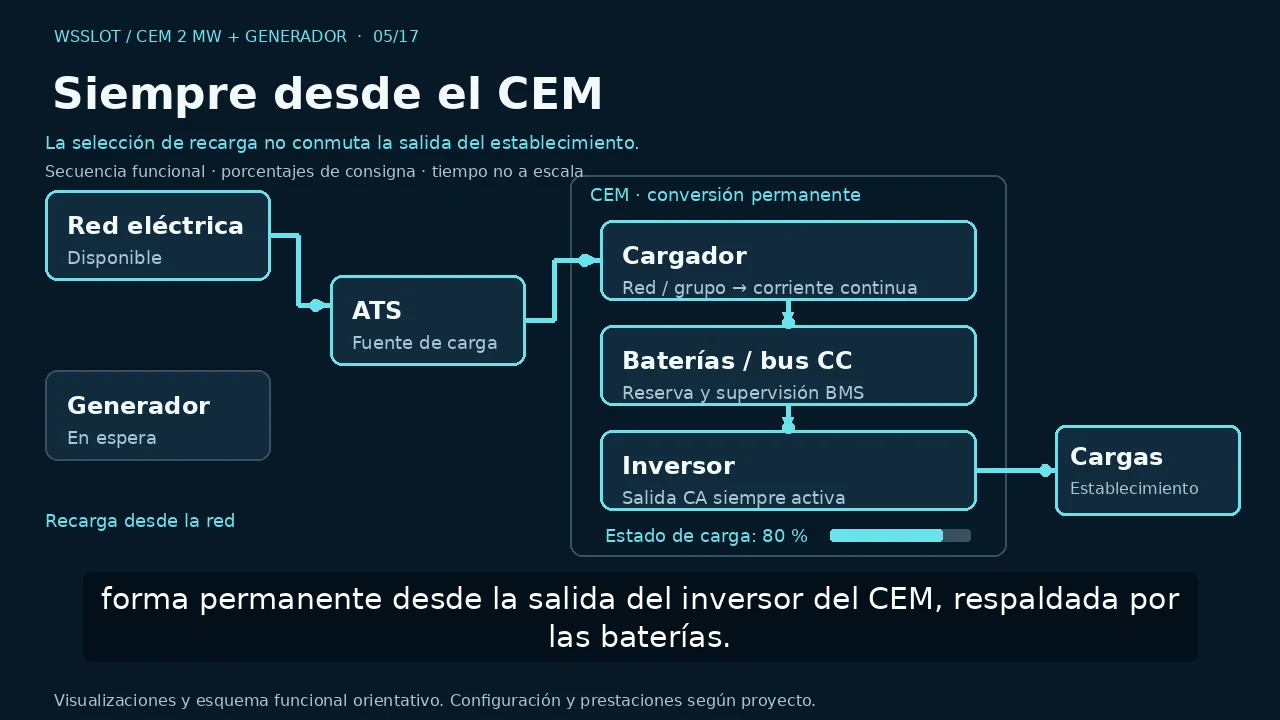
In this design, hotels, data centres and industrial sites are continuously supplied from the CEM inverter output, backed by the batteries. The grid feeds the charging stage. The facility receives a regulated output without connecting its equipment directly to an unstable grid.
06 · The grid fails, service continues
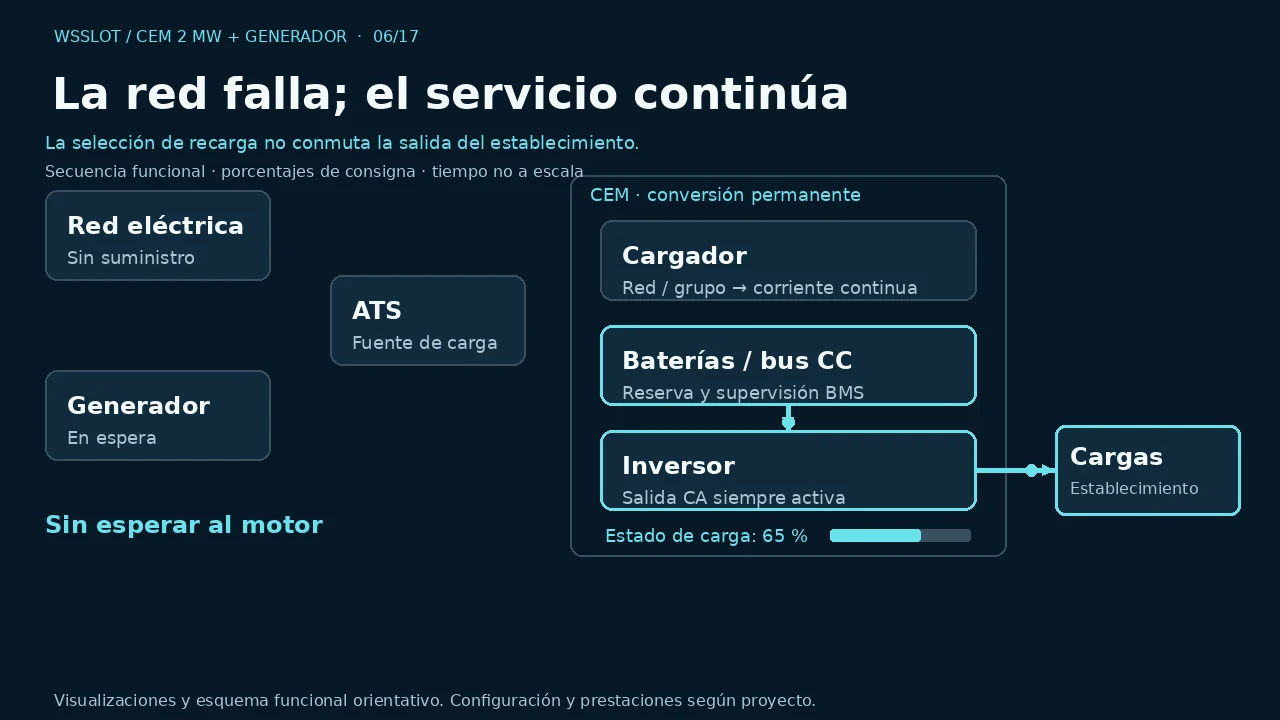
When grid power is lost, the batteries continue supplying energy through the same inverter. The facility does not have to wait for the generator to start. The aim is to keep supplying power without outages or brief interruptions, including while the charging source changes. Continuity must be verified during commissioning.
07 · At 30%: start and recharge
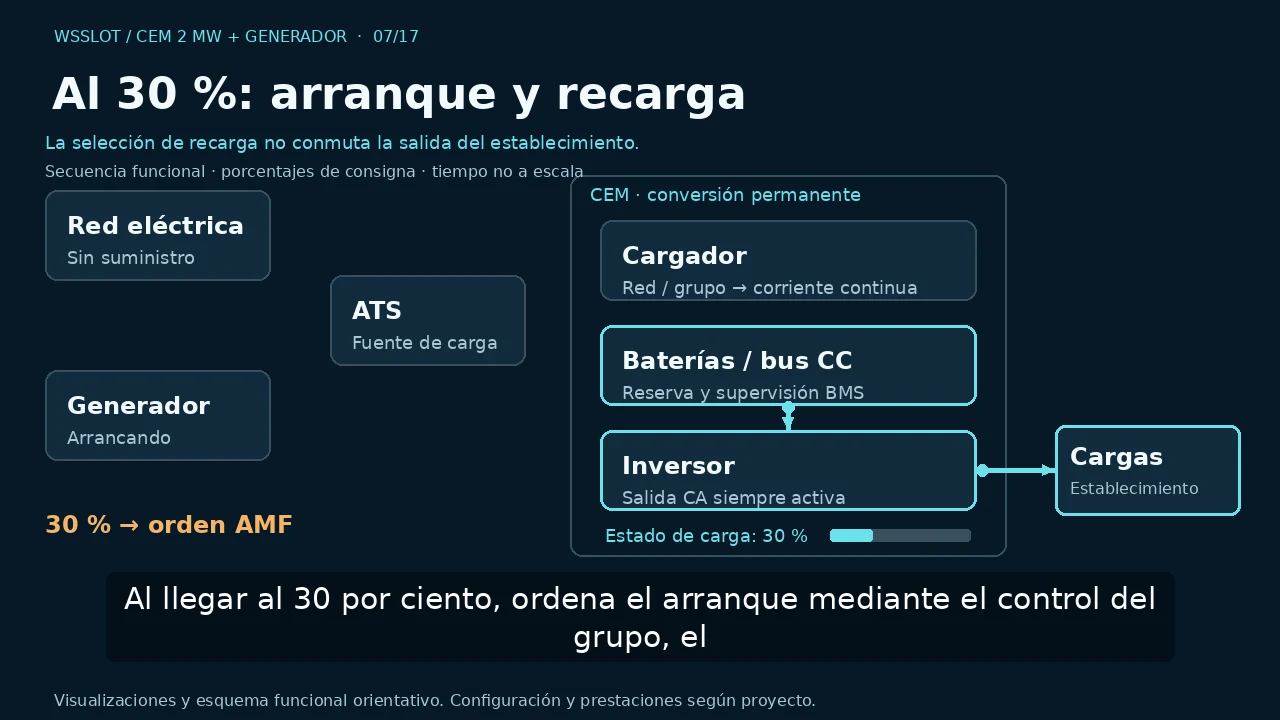
During the outage, the controller monitors battery state of charge. At 30%, the AMF starts the generator. Once it is stable, the ATS selects it as the source for recharging the CEM. The inverter continues to supply the facility throughout the changeover.
08 · At 80%: engine shutdown
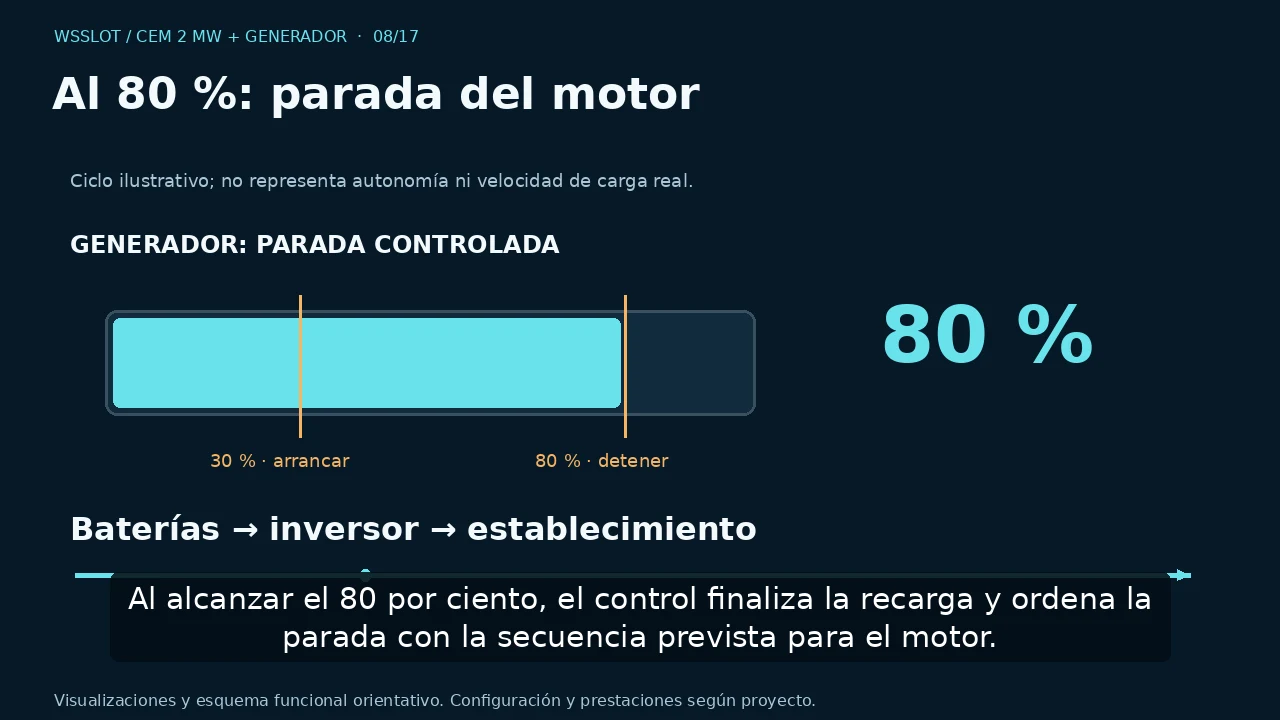
The generator restores the reserve while the CEM keeps supplying the loads. At 80%, the controller ends recharging and starts the engine shutdown sequence. The batteries continue supplying power. If the outage persists, the cycle repeats between both setpoints within the system's limits and protections.
09 · Fuel only when needed
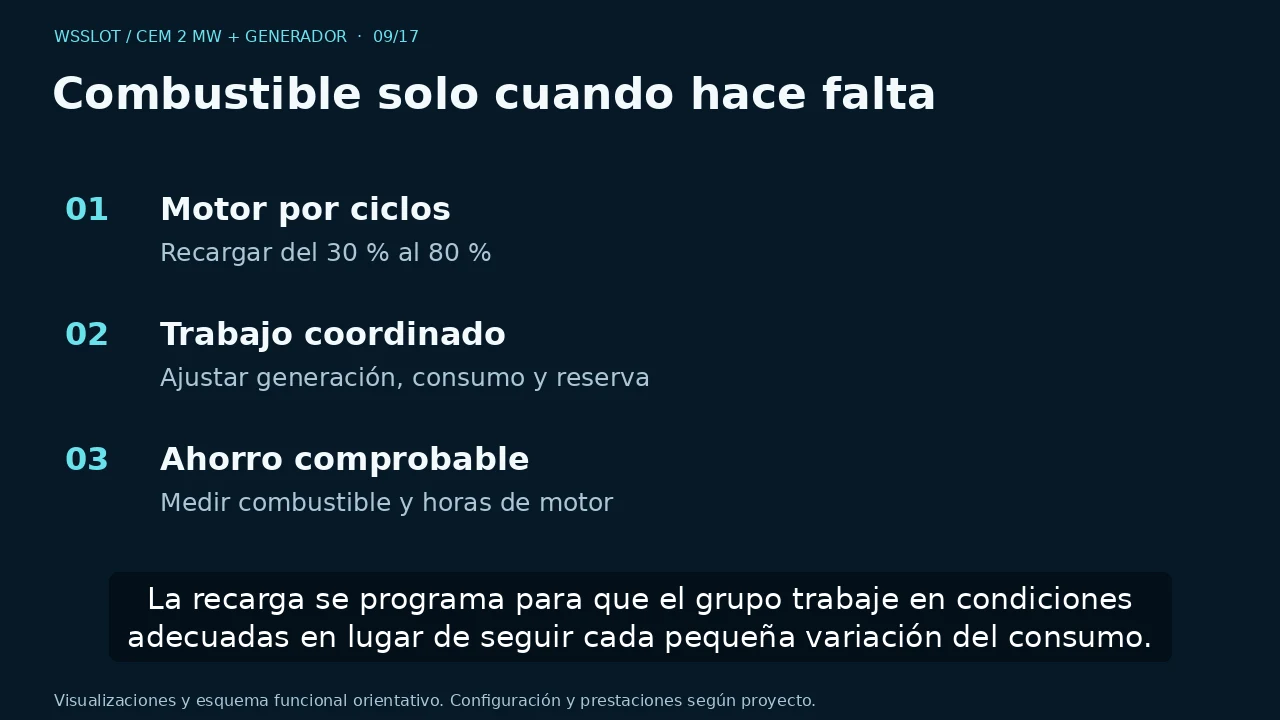
This strategy avoids running the engine throughout the outage. Recharging is scheduled so the generator operates under suitable conditions instead of following every small change in demand. It can reduce engine hours, fuel use and wear. Actual savings depend on the load, generator and conversion losses and are verified by measurement.
10 · Continuity and power quality
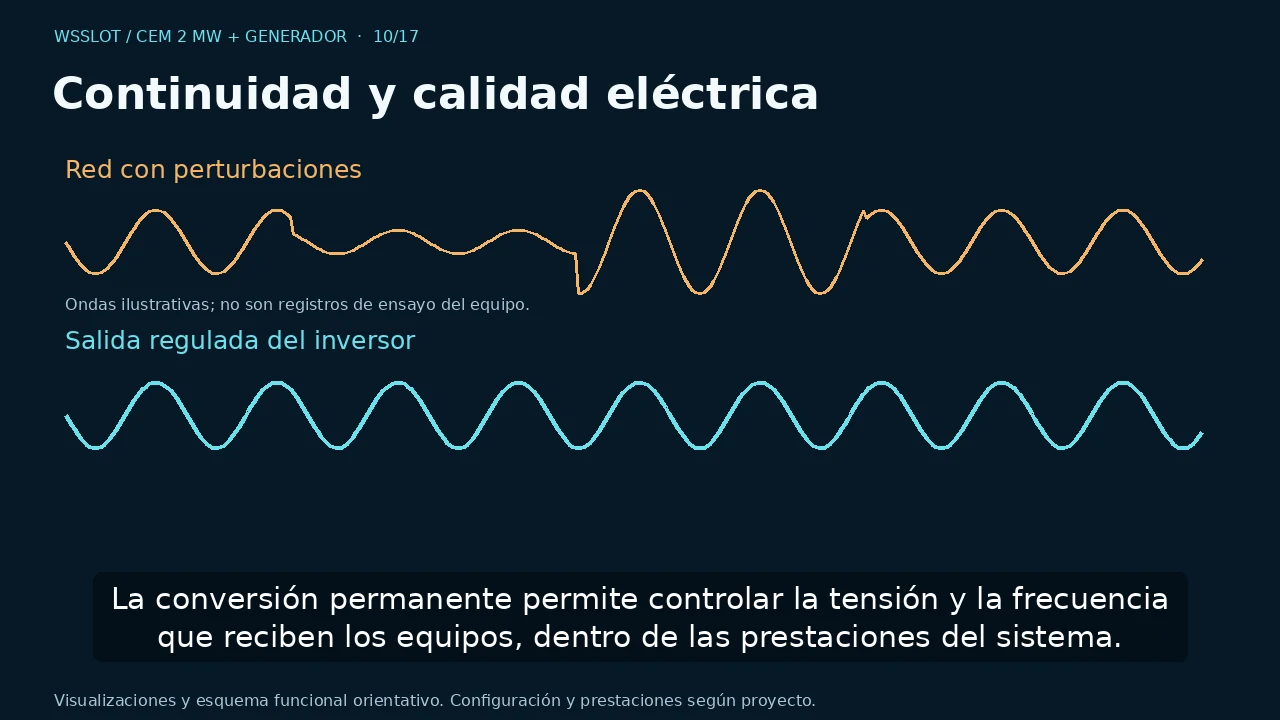
As well as maintaining power during an outage, continuous conversion lets the system regulate the voltage and frequency supplied to equipment within its operating limits. With a grid subject to dips, surges and other disturbances, the goal is stable power that reduces resets and unexpected stops. Protection and output quality are verified for each project.
11 · Protecting equipment and services
Avoiding interruptions and reducing disturbances limits equipment exposure to electrical faults and abrupt restarts. This can reduce failures and maintenance and help extend equipment life. In a hotel, it protects the guest experience. In a data centre, it helps keep services available. In industry, it protects processes and production. Some causes of equipment failure remain.
12 · Grid power returns, output continues

When grid power returns, the controller checks its stability before using it to recharge. The source change happens upstream of the storage system. The facility is still supplied from the CEM output, so the return of grid power does not require cutting power to equipment.
13 · Hotels
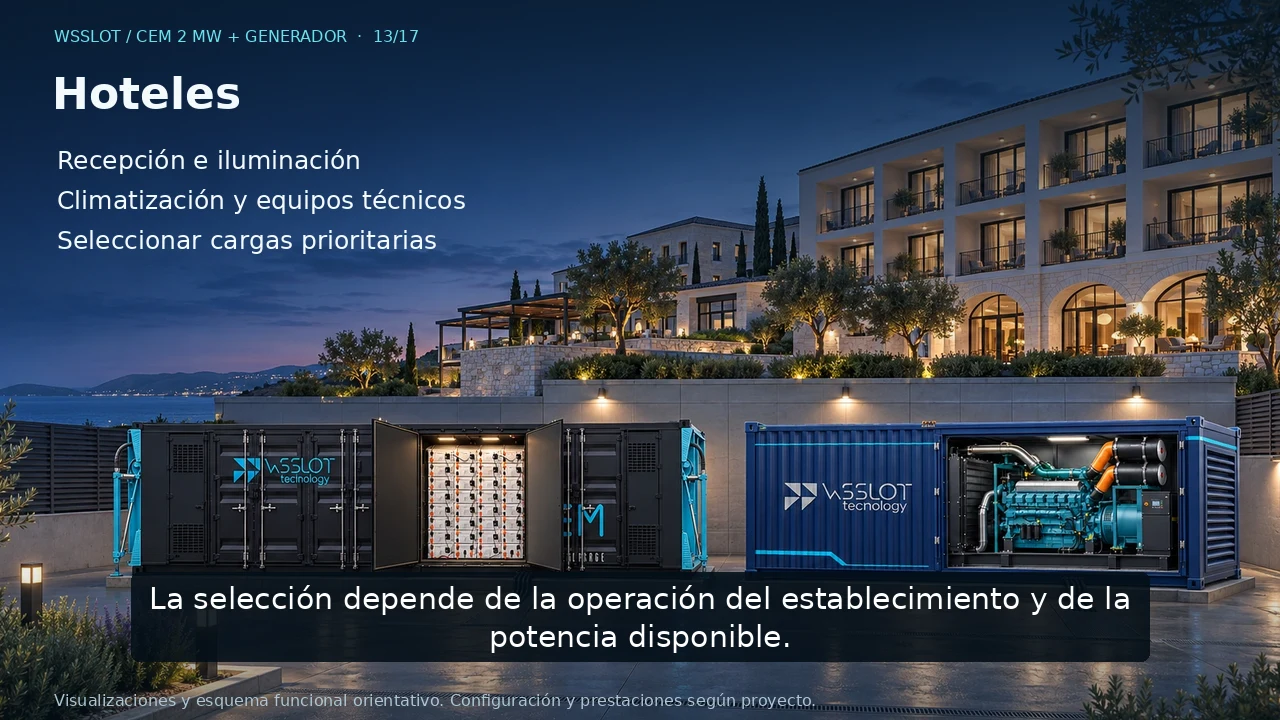
In hotels, we assess priority services such as reception, lighting, air conditioning and technical equipment. Selection depends on the facility's operations and available power. The goal is to reduce the impact of an outage on service and the guest experience.
14 · Data centres
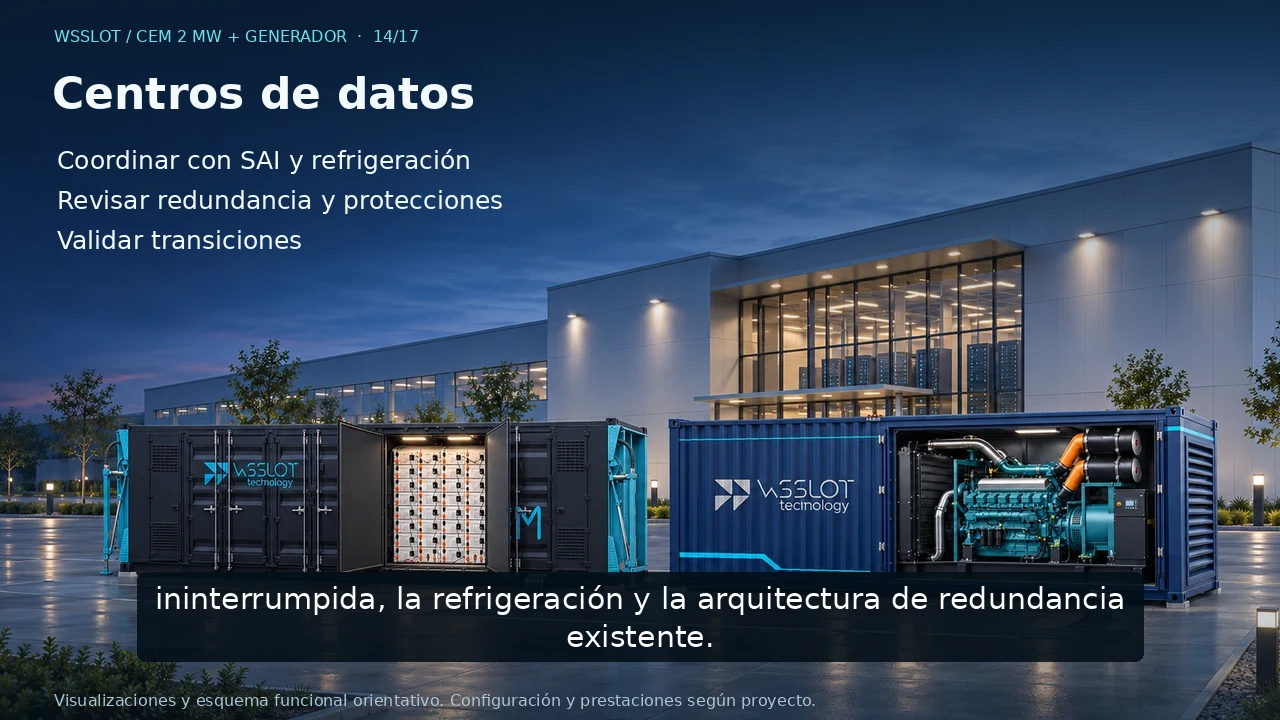
In data centres, the assessment must account for uninterruptible power supplies, cooling and the existing redundancy design. The system does not automatically replace the UPS. Continuity for IT loads requires verifying compatibility, transitions and protection.
15 · Industry
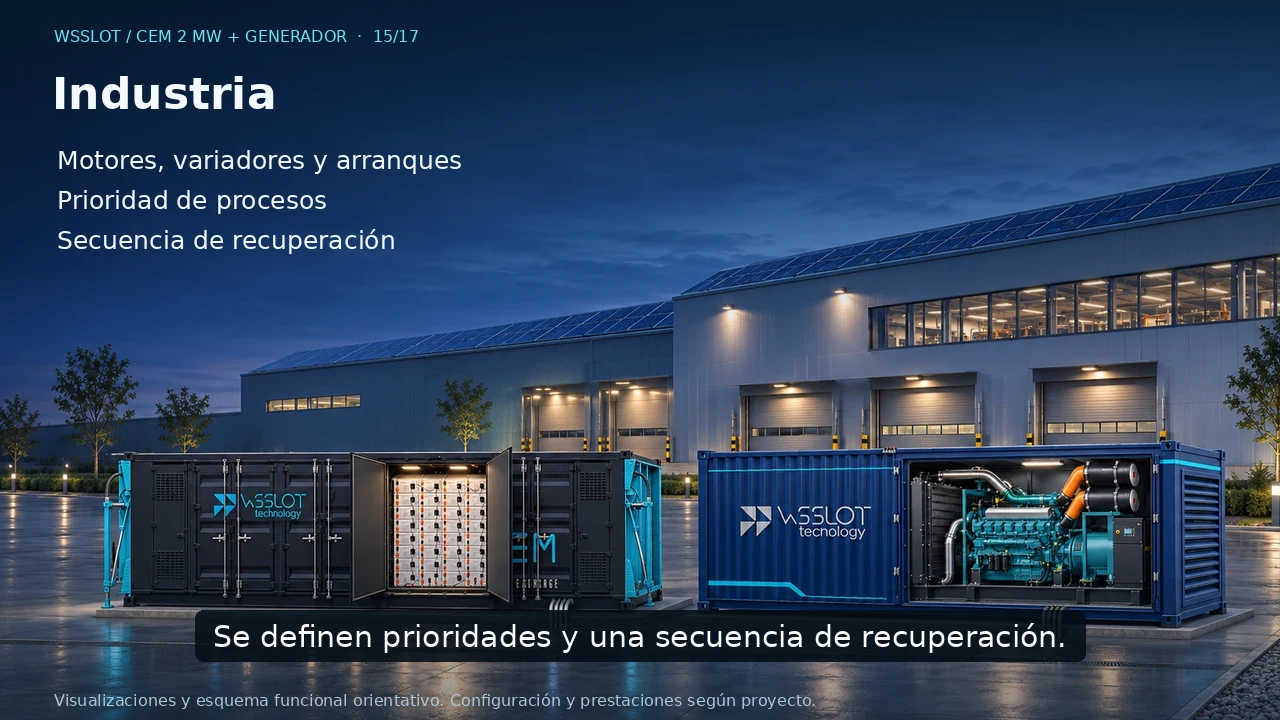
In industry, we review motors, drives, start-up loads and processes that cannot tolerate an unexpected shutdown. We define priorities and a recovery sequence. Conversion power, storage capacity and backup generation are selected for the actual operating conditions.
16 · Power and runtime are different
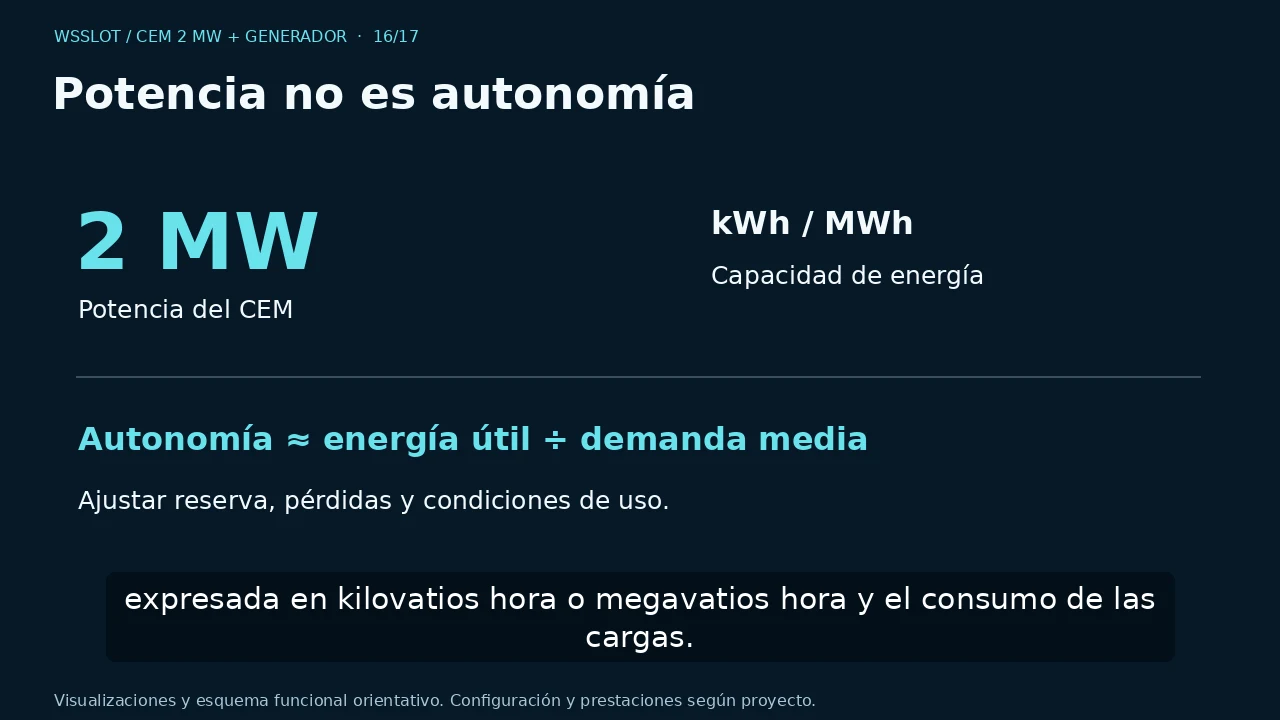
Two megawatts is a power rating. Runtime depends on usable battery capacity in kilowatt-hours or megawatt-hours and on the loads' consumption. Safety reserve and losses also affect it. An operating duration can be established only with those figures.
17 · The project determines the result
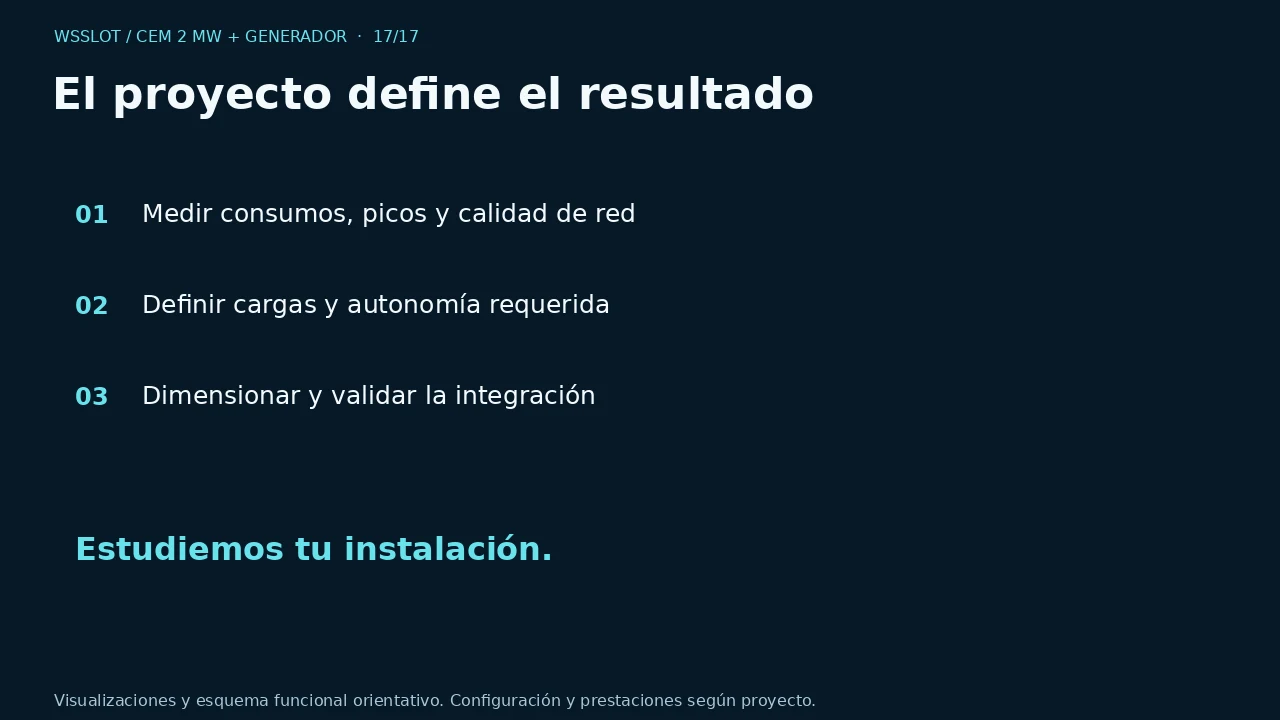
The next step is to measure consumption, power peaks and grid quality and determine which equipment must stay on and for how long. Then we validate transitions, protection and generator integration. WSSLOT coordinates storage and generation to assess continuity for your operation.
Interiors, installations and electrical paths are shown in concept illustrations and indicative diagrams. Capacity, runtime, protection and performance must be defined and validated for each project.
Assess my installation